Lesson 1 | Geologic Processes and Hazards
| Today, we'll be learning about the Geologic Processes and Hazards that can be seen in the community. |
Geology is the study of the Earth and its history. It involves studying the materials that make up the earth, the features and structures found on Earth, as well as the
processes that act upon them. It also deals with the study of the history of all life living on the earth now.
But how do Geologic Processes occur?
Geological processes are naturally occurring events that directly or indirectly impact the geology of the Earth. Examples of geological processes include events such as plate tectonics, weathering, earthquakes, volcanic eruptions, mountain formation, deposition, erosion, droughts, flooding, and landslides. Geological processes affect every human on the Earth all of the time, but are most noticeable when they cause loss of life or property. These threatening processes are called natural disasters.
How about Geologic Hazards?
A geologic hazard is an extreme natural event in the crust of the earth that poses a threat to life and property, for example, earthquakes, volcanic eruptions, tsunamis (tidal waves), and landslides. It is a large-scale, complex natural events that happen on land. These hazards can cause immense damage, loss of property, and sometimes life. Geologic hazards can play a significant role when infrastructure is constructed in their presence. The unpredictable nature of natural geologic hazards makes identifying, evaluating, and mitigating against them a unique challenge.
Here are some examples of Geologic Hazards:
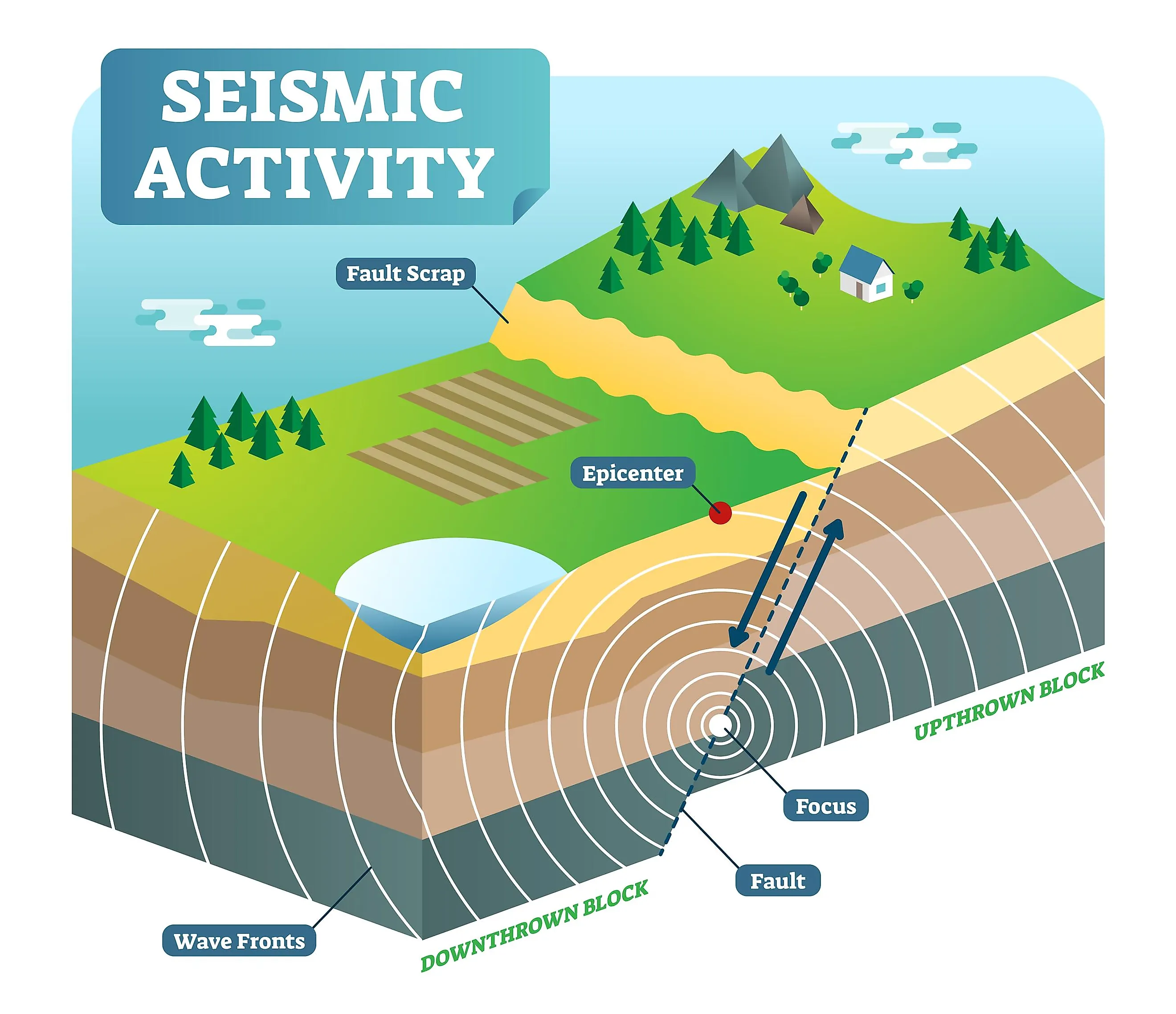
Figure of Earthquake, Courtesy of WorldAtlas
1.) Earthquakes
Earthquake is one of the most violent natural phenomena. According to the number of victims and destructive force, it exceeds all other natural disasters. Earthquakes also happen under the ocean and can cause tsunamis.
Earthquakes and volcanic eruptions can trigger landslides, especially in areas with water saturated soils, a common characteristic of Cascadia. Landslides may result in falling rocks and debris that collide with people, buildings, and vehicles.
Meanwhile, listed below are the hazards created by an earthquake.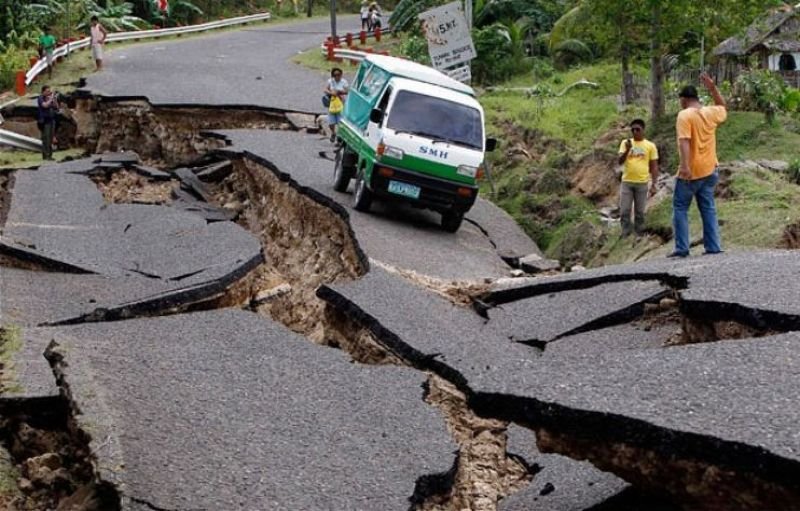
- Ground Shaking
Ground shaking is one of the hazards resulting from earthquakes, volcanic eruptions, and landslides. Ground shaking is both a hazard created by earthquakes and the trigger for other hazards such as liquefaction and landslides. Ground shaking describes the vibration of the ground during an earthquake.
- Surface Faulting
Surface Faulting is displacement that reaches the earth's surface during slip along a fault. It commonly occurs with shallow earthquakes; those with an epicenter less than 20 km. Surface faulting also may accompany aseismic
creep or natural or man-induced subsidence.
- Landslide
It is the movement of a mass of rock, debris, or earth
down a slope. Landslides are a type of "mass wasting," which denotes any down-slope movement of soil and rock under the direct influence of gravity. The term "landslide" encompasses five modes of slope movement: falls, topples, slides, spreads, and flows.

- Liquefication
It describes the way in which soil liquefies during ground shaking. Liquefaction can undermine the foundations and supports of buildings, bridges, pipelines, and roads, causing them to sink into the ground, collapse, or dissolve.
** - Tsunamis**
These are giant waves caused by earthquakes or volcanic eruptions under the sea. It can injure or kill many people and cause significant damage to buildings and other structures. The speed of tsunami waves depends on ocean depth rather than the distance from the source of the wave. Tsunami waves may travel as fast as jet planes over deep waters, only slowing down when reaching shallow waters.
2.) Volcanic Eruptions
A volcanic eruption occurs when magma is released from a volcano. Volcanic eruptions are major natural hazards on Earth. Volcanic eruptions can have a devastating effect on people and the environment.
Meanwhile, these are the hazards that volcanic eruptions cause:
- Tephra
These consist of pyroclastic fragments of any size and origin. It is a synonym for "pyroclastic material." Tephra ranges in size from ash (<2 mm) to lapilli (2-64 mm) to blocks and bombs (>64 mm).
- Pyroclastic Flow
It is a dense, fast-moving flow of solidified lava pieces, volcanic ash, and hot gases. Pyroclastic flows form in various ways. A common cause is when the column of lava, ash, and gases expelled from a volcano during an eruption loses its upward momentum and falls back to the ground. Another cause is when volcanic material expelled during an eruption immediately begins moving down the sides of the volcano. Pyroclastic flows can also form when a lava dome or lava flow becomes too steep and collapses.
- Lahar
It is an Indonesian term that describes a hot or cold mixture of water and rock fragments that flows down the slopes of a volcano and typically enters a river valley. Lahars are extremely dangerous especially to those living in valley areas near a volcano. Lahars can bury and destroy manmade structures including roads and bridges.
- Flood
It is an overflow of water that submerges land that is usually dry. Floods can look very different because flooding covers anything from a few inches of water to several feet.
- Lava Domes
These are formed by viscous magma being erupted effusively onto the surface and then piling up around the vent. Like lava flows, they typically do not have enough gas or pressure to erupt explosively, although they may sometimes be preceded or followed by explosive activity. The shape and size of lava domes varies greatly, but they are typically steep-sided and thick.
- Poisonous gases
These are gases that are released during a volcanic eruption, come from deep within the Earth. The largest portion of gases released into the atmosphere is water vapor.